PROCRASTINATION NATION
CONTENTS
01AI ADOPTION IS AN UNCERTAINTY PROBLEMThe thought versus felt gap
02PEAK PROCRASTINATIONThe habit was at full strength before AI arrived
03FOUR STAGES. FOUR QUESTIONS.The tool. Recognise a response, not a personality type
04THE REPORTS ARE RIGHT. THAT'S THE PROBLEM.WEF, Deloitte, BCG and the practical gap
05USING IT ISN'T THE SAME AS MOVINGThe adoption illusion and the interrupted handover
06SAME COMPANY. DIFFERENT AI.The shadow strategy
07WE GAVE IT A PERSONALITYA short history of a national pastime
08WHAT TO DO WITH THE PAUSEPositive procrastination
09BACK TO THE BLIND SPOTPost-certainty, and practice to identity
10WE WORK IN THREE WAYSWork with us
SPWHERE THE NUMBERS COME FROMSmall print, methods and references
Procrastination Nation · Issue 02 · October 2026 · Part of Media Zoo Group

Uncertainty Experts///Paper No.02///The Cost of Uncertainty
/// From Sam and Katherine
FROM PROCRASTINATION NATION TO INNOVATION NATION
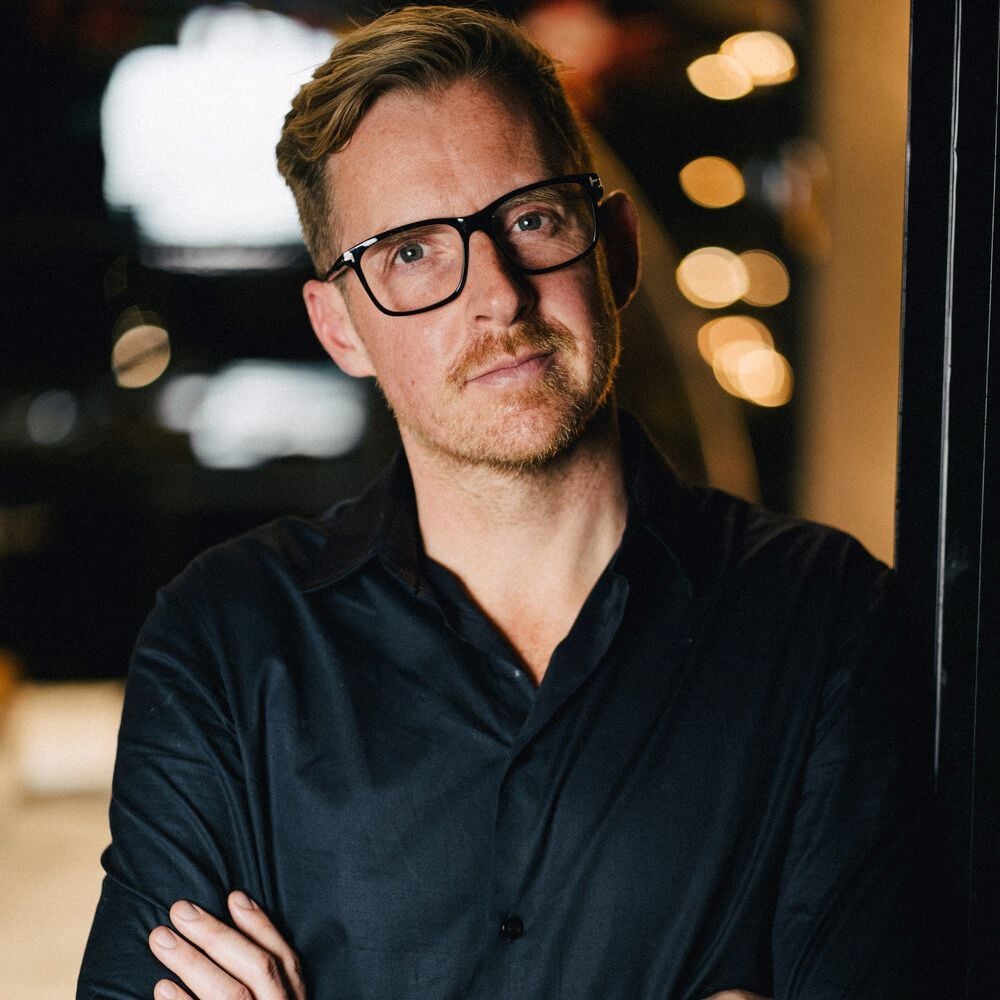

Sam Conniff &
Katherine Templar Lewis
Katherine Templar Lewis
As teams eye-roll and scroll through the arrival of history's most advanced technology, procrastination rises while innovation and engagement fall.
UK teams feel busier than ever, and their leaders feel more frustrated by slow progress than ever. It has never been harder to keep anything moving. Emails get longer as attention gets shorter; more words are written and read by fewer humans. And we've all sent, and been sent, slop showing up as a PowerPoint slide.
WE'VE NEVER FELT BUSIER, OR LESS PRODUCTIVE.
This paper offers evidence of why AI is leading to professionalised procrastination instead of the promised land of tech-enabled human empowerment. It also offers a practical route out, by taking procrastination seriously as a symptom and showing how it can be generative rather than a failure of character.
With UCL, we have researched uncertainty's effects on professional teams since 2020, and charted the rise of procrastination as a dominant response when uncertainty hits. We propose that, with the right tools in place, procrastination can offer tired teams the space they need to experiment with, and even enjoy, the new chapter of uncertainty AI brings.
This paper embodies its advice. It's exploratory and in places unfinished (that's not an excuse) because perfectionism is often just procrastination, with a clipboard.
Love & Uncertainty
Uncertainty Experts, part of Media Zoo Group · October 2026
Uncertainty Experts, part of Media Zoo Group · October 2026
/// What this paper covers
WHAT'S INSIDE
PART 1 · 01–02
Why is AI driving procrastination, possibly more than innovation?
The thought versus felt gap, and peak procrastination.
THE TOOL · 03
Four stages. Four questions.
The point is to recognise a response, not to collect another personality type.
PART 2 · 04
What do the global AI skills reports get right, and how can we make them practical?
The direction is useful. Here is the practical gap.
PART 3 · 05–06
How AI may be disrupting the adoption curve, and why uncertainty creates a shadow strategy.
Using it isn't the same as moving.
PART 4 · 07–08
Why is the UK such a Procrastination Nation, and how do we turn that to our advantage?
We didn't invent it. We gave it a personality.
PART 5 · 09–10
What to do with all of this to help your team.
Not just booking a call with us, but that too.
NOTES
Small print
Where the numbers come from, what replicated, and what did not.
01 // Introduction: the thought versus felt gap
AI ADOPTION IS AN
UNCERTAINTY PROBLEM
Framing AI only as a skills problem treats it as a cognitive challenge and overlooks how people experience it.
3×
more often, people with a low tolerance for uncertainty describe AI as “a threat”.
24%
low tolerance: opportunity
69%
high tolerance: opportunity
Same technology, opposite experience.
IT'S NOT EASY TO EXPERIMENT WHEN YOU'RE ANXIOUS.
If you've come across Uncertainty Experts before, you've heard us talk about the thought versus felt gap. In 2026, the most uncertain year ever (again), the gap between how we think (usually very balanced) and how we feel (usually very negative) drives the difference between our intentions (transformation) and our actions (distraction).
The usual suspects, WEF, Deloitte, BCG and the rest, have correctly identified the attributes we need to develop, and then run into the same practical gap. Identifying capabilities is useful, if directional. But AI is all up in our collective grill, and the world needs something practical, accessible and, frankly, a little less conversation and a little more action, please.
You can't install curiosity or an experimental mindset. Many of us built careers on having the answer ready, and came up as happy little work sausages worshipping at the altar of productivity, climbing the endless ladder of a to-do list. We don't need another set of inspirational but forgettable words on the walls.
To build that bridge, we've gone over five years of data from 3,159 professionals across 25 organisations, and run two 2026 surveys, of our own audience and an independently recruited panel, to test the argument outlined here.
/// Play along
FIVE PROMPTS, SCATTERED THROUGH THE PAPER.
Copy them into whatever AI you already use. Each takes a few minutes, and each works better if you answer honestly, which is harder than it sounds. What you type goes into that tool like everything else you put in it, so apply your usual judgement: your organisation's approved tool for anything about work, no names or other people's details.
PROMPT 01
THE WEEK YOU DIDN'T TAKE
01 of 05 · about 10 minutes
Five days, no obligations, and an AI that does whatever you ask. What would you actually build?
You're a practical build partner, not a coach. I have five free working days to make one thing I'd love to have made, for home or for work. It doesn't have to be software. Ask me six questions, one at a time: ask one, stop, wait for my answer. No suggestions until all six are answered. Then reflect back what I seem to care about and ask me to name the one thing I'd build. Don't choose for me. Ask what I'd do in the first hour of day one, write a five-line brief in my words, and stop. Start with question one only.
02 // Context
PEAK
PROCRASTINATION
AI shows up without invitation, at a party where everybody was already mid-distraction.
Since 2021, with UCL support, we've been asking people and organisations how they respond to uncertainty. In 2021, six in ten described some sort of procrastination. Delay, distraction, over-analysis, busy work, freeze. By 2023 it was eight in ten, and it has pretty much plateaued since.
Which is awkward, because open-minded curiosity, a beginner's mind and a tolerance for getting it wrong in front of people are exactly what AI adoption needed. By the time ChatGPT earned its reputation for hallucination, a plate-spinning public filed it under another annoying thing to get your head around, somewhere between whether they were too late to start a TikTok and whether they were too early to buy an NFT.
PROCRASTINATION NAMED AS THE RESPONSE TO UNCERTAINTY
Fig. 01
60%
2021
80%
2023
77–78%
2024–25
77–78%
2026
AI arrives · Nov 2022
The habit reached close to full strength before anyone had heard of ChatGPT.
Participants in Uncertainty Experts programmes, identically worded question each year. Annual figures describe successive samples, not the same people followed over time.7
/// What peak procrastination looks like
CLICK TO DECLASSIFY
Between 2023 and 2026, the top five safety behaviours (avoidant acts that ease the discomfort of uncertainty) named by participants. Redacted, because that is roughly how they arrive.
0 of 5 declassified
Participants in Uncertainty Experts programmes, 2023 to 2026. Your team's version of this list is more interesting than ours.7
WHAT PEOPLE NEED. WHAT THEY GOT.
We've helped teams from the National Health Service to Netflix increase their uncertainty tolerance. Regardless of sector or size, there are four conditions for realising the generative force of uncertainty. When they're in place, people move from change-resistant to change-ready.
People need
A SANDBOX
Somewhere bounded, where problems become a novelty not a necessity.
AI turned up as
Everything, everywhere, in your face. Whilst threatening to steal your job.
People need
A HEALTHY HORIZON
Where there's motivation without suffocation. No flaming metaphors.
AI turned up as
An endless race. Keeping up with the newsletters is becoming a job, never mind keeping up with AI itself.
People need
EXPERIENTIAL EVIDENCE
Of personal benefit, if not to self, then to someone we trust.
AI turned up as
Really bad role models. From the Terminator to the person talking to their Tesla.
People need
COMMUNITY
Open and supportive conversations with people it won't cost us to fail in front of, backed by a sense of humour.
AI turned up as
A one-to-one with a chatbot, backed by a thousand influencexperts whose fifth Claude tip will blow your mind.
IF THE WORST ADVERTISING AGENCY IN HISTORY HAD THE BRIEF TO LAUNCH AI AS THE ULTIMATE TOOL FOR HUMAN ENABLEMENT, THEY COULD NOT HAVE DONE A BETTER JOB OF COMMUNICATING THE OPPOSITE OF WHAT PEOPLE NEEDED.
External // Pew Research
Pew asked Americans how they felt about AI in daily life in June 2025. Half were more concerned than excited. One in ten were more excited than concerned.
YOU ARE HERE. WE ALL ARE.
Because nothing makes us feel more certain than a two by two. By the time we arrived in 2026, most of us find ourselves in one of the following four. Pick one.
High engagement, high certainty
THE OVEREXTENDED ENTHUSIAST
In the group chat, trading model names. The technique is often genuinely good; the sales pitch needs work. The risk is that expertise stops being an invitation and starts looking like an entrance exam.
Explore this in Uncertainty Experts
Ep 01 · Neuroplasticity
Ep 02 · Predictive processing
Ep 03 · Embodied cognition
PROMPT 02
YOUR AI DOESN'T KNOW YOU
02 of 05 · about 8 minutes
Most people's AI has no idea what conditions they work badly in. Ten minutes and three sentences fixes that.
I want you to know when I work badly and when I work well. Don't diagnose or label me. This is working conditions, not therapy. Ask me seven short questions, one at a time, about a recent time I put something off and a recent time I worked well. Wait for each answer, no comments in between. At the end, ask me to finish three sentences in my own words: "I tend to put things off when..." "The first sign is..." "I work best when..." Then tell me one thing you'll do differently. Only offer to remember them if you genuinely can. Start with question one only.
03 // How to use this
FOUR STAGES.
FOUR QUESTIONS.
The point is to recognise a response, not to collect another personality type.
Uncertainty, AI and most interesting people don't fit neatly in boxes. This is a way of noticing what is happening and trying something different. It's a loop: you can go round it three times before lunch, and backwards on a bad Tuesday.
Where it starts→Loop→Where it stops being a technique
Stage 01 · NOTICE
What's the uncertainty in front of you that's making you want to leave the room?
Where it starts. Name the not-knowing rather than the task. The first honest answer is usually smaller and more specific than the story you have been telling about being busy.
/// Where you are getting stuck today
THINK OF A DECISION YOU'RE AVOIDING RIGHT NOW.
The first honest no is where the work is. It places the decision, not you, and you will be somewhere else by Thursday. The aim is not to stay in a good box. It is to notice the signal, make room to think, choose the next move and practise until that response is easier to reach for.
PROMPT 03
RUN IT ON SOMETHING REAL
03 of 05 · about 8 minutes
The four questions, on a decision you're actually avoiding.
I'm avoiding a decision. Ask me to describe it in a sentence, no names. Then ask me these four, one at a time, waiting for each answer: what's the uncertainty in front of you that's making you want to leave the room; have you given this any space, or only more attention; how much of what you're waiting for is real information, and how much is so you don't have to feel uncertain; what would you do if you weren't thinking about how it looked. Don't diagnose me, summarise or decide for me. At the end, ask me to choose one move: a pause with a date, one piece of information I'll go and get, or the smallest useful thing before tomorrow. Then stop.
04 // The route
THE REPORTS ARE RIGHT.
THAT'S THE PROBLEM.
The direction is useful. Here is the practical gap we want to address. We agree with the direction of the big reports — the table separates what they contribute from what we bring to it.
| Report | What it contributes | Why this is an uncertainty problem |
|---|---|---|
| WEF | Curiosity and lifelong learning; resilience, flexibility and agility; analytical and creative thinking. | These are hard to summon on instruction, and often harder under pressure. Working on our response to not knowing can help create room to learn, reconsider and try. |
| DELOITTE | A focus on enduring human capabilities, rather than technical competence alone. | Knowing a capability matters is different from being able to use it. Uncertainty tolerance is connective tissue across our approach, not a replacement for every other capability. |
| BCG | The difference between using AI and redesigning work to realise its value; strategy and the human side matter. | When a person experiences AI as a threat, permission and training may not be enough. We also need to understand that response, without pretending every barrier is psychological. |
Sources: WEF, Future of Jobs Report 2025; Deloitte, 2026 human-capabilities reporting; BCG, AI at Work 2026. The right-hand column is UE interpretation, not a claim that each report has tested uncertainty tolerance.4–6
“BE CURIOUS” IS A DESTINATION, NOT AN INSTRUCTION.
That is enough theory for this page. First, let's look at what happens when those capabilities meet an actual working day. We return to the practical route, from practice to capability to identity, at the end.
05 // The adoption illusion
USING IT ISN'T
THE SAME AS MOVING
AI is already in the working week. That is not the same as learning to work differently. In our independently recruited comparison panel, three answers sit awkwardly beside each other.
100% OF THE PANEL
Fig. 02
Used AI on four or five of their last five working days
54%
Used it only for tasks they already knew it could handle
33%
Built their own workflows or agents
6%
UE comparison panel, August 2026, n=110. Rounded from 53.6%, 32.7% and 6.4%. Separate questions and categories, not a conversion funnel.7
You don't need to build an agent to use AI well. These are not marks out of ten for being clever. But a login doesn't tell you whether someone's work is changing.
In the same panel, 62% had put off an AI tool they believed would help them, and 48% had done so more than once. Roughly three quarters said their organisation encouraged experimentation and made it easy. Permission alone does not explain the hesitation.7
THE CURVE THAT DIDN'T FIRE
The familiar adoption curve is a story about who gets there first and who follows. We're interested in the human bit in between. Someone discovers something useful. Someone else asks the awkward questions. The rest of us get a reason to try it that is more convincing than being told we're falling behind.
That handover is the engine, and it has run for hybrid corn, the fax machine and contactless. With AI, three things went wrong with it at once, and none of them is about the technology.
01
THE ULTRA-ENTHUSIASTS MADE JOINING IN LOOK EXHAUSTING
I say this as someone very much in the group chat. The technique is good. The sales pitch needs work. Try suggesting a second brain to someone whose first has been absolutely pummelled by the last few years, and watch their face. Then we start trading model names like children comparing whose dad would win a fight. The risk isn't that the enthusiasts know too much. It's that their expertise stopped being an invitation and started looking like an entrance exam.
02
THE USEFUL SCEPTICS WERE LET OFF
Sceptics do a specific job on every adoption curve, and it is the one nobody thanks them for: they improve the thing. Every previous technology was pitted against another technology, so the sceptic had to argue on features, and the argument made the thing better. This one is pitted against people. “I'd rather talk to a human” is unanswerable. So the criticism stays and the investigation stops. The loss is the willingness to find out together.
03
THE MIDDLE IS BUFFERING
Not adopting, not refusing. Using the approved tool, producing the expected output, getting through the day, and waiting for something to load that never quite does. Nobody has asked them how it is going. From a distance, everything looks reassuringly busy.
THE HANDOVER, INTERRUPTED
Fig. 03
01 The familiar pattern
Early enthusiasm becomes an invitation to everyone else.
Innovators → early adopters → early majority → late majority → later adopters
02 The maladaptive version
Our interpretation: usage can spread while learning stalls.
Overextended enthusiasts — impressive, but hard to follow.
Compliant middle — using it. Not necessarily exploring.
Withdrawn sceptics — criticism stops becoming a test.
Conceptual illustration, not an empirical distribution or a forecast. No percentages or measured curve are implied — the broken handover is the argument.8
NOBODY CHECKED WHETHER WE WERE QUALIFIED
There is a moment many new parents will recognise. You get home from the hospital, put the baby down, look at each other and think: who on earth decided we were allowed to do this on our own?
Parts of AI adoption feel like that. Here is a tool with enormous possibilities. Everyone assumes you will work it out in the gaps between meetings. Useful guidance, a bounded first attempt and somebody to talk to would not spoil the magic.
/// Procrastination, industrialised
1 IN 6
coping behaviours looked productive
1 IN 11
looked specifically like work
Lists. More research. Another meeting. The beautifully tidy inbox. Helping other people appeared as a sneaky coping move nearly six times as often as it appeared as a routine one. Solving somebody else's problem remains a wonderfully respectable way of avoiding your own.7
An admission · Sam
While writing this report, I was trying to pull together all the strands I'd enjoyed noodling on. I had just been told to be clearer than clever. The deadline was getting closer, and I was worried the thing wouldn't be worth anybody's time. So I took a call I did not need to take. Twenty-three minutes later, Claude and I had started a project on search rankings, sketched a chatbot and built an HTML artefact as a solution to their genuine problem.
I was Procrastination Man, using my powers of distraction-driven AI to save the day. Only it was somebody else's day. My delay. And the killer, clear takeaway is… hold on, they're calling back.
IF ADMIN GAVE PROCRASTINATION SOMEWHERE TO HIDE, AI CAN DRESS IT AS HYPERPRODUCTIVITY.
I mentioned this report to a client. He laughed and told me he turns Claude's thinking up so he can get a game of Candy Crush in while he waits. The work is not quite as good as he'd do himself, he said, but that's a fair price to pay.
Those are two anecdotes, not the entire workforce. The same tools have helped me make things I could not have made alone. Both can be true. The question is whether the next prompt helps with the thing, or helps me stay away from it.
Now widen the question. If this were happening across your organisation, what would help you notice?
PROMPT 04
A WEEK-SHAPED EXPERIMENT
04 of 05 · about 12 minutes
Bounded, finished by Friday, safe to get wrong.
Help my team design one small AI experiment for this week: safe to get wrong, finished by Friday, something we'll observe chosen in advance, done together and talked about afterwards. First ask which AI tools we're allowed to use and what we can put into them; if I'm not sure, use made-up data only. Then ask three questions, one at a time: what we do most days, one AI tool or task we've been putting off trying, and what would make it safe to get wrong. Then ask me to draft the experiment in one sentence, check it against the four conditions and ask me to fix what's missing. Don't write it for me. Ask for my first move and its day, then stop.
06 // The shadow strategy
SAME COMPANY. SAME QUESTION.
DIFFERENT AI.
Two strategies are running in one building. Only one of them is on the slides.
We run a live version of Uncertainty Experts called the Leadership Lab. We ask the leaders in the room and their wider teams about the uncertainty facing their organisation, then put the answers next to each other. That sounds simple until you see the comparison. Across 674 free-text answers in nine organisations, the same question revealed rather different priorities.
NAMED JOBS OR ROLES AS THE BIGGEST UNCERTAINTY FACING THE ORGANISATION
7.3%
Senior leaders
20.6%
Managers
19.5%
Team members
Senior leaders: among those mentioning AI, market framing was around five times as common as jobs framing.
Managers and team members: jobs framing was at least as common as market framing.
UE client surveys, 2026: 674 responses across nine organisations. The jobs gap narrows when the largest contributing client is removed; the AI-framing difference remains in that analysis.7
The leaders were more likely to be talking about what AI does to the business. Their people were more likely to be talking about what it does to them. Nobody needed to lie for those answers to diverge.
TWO STRATEGIES ARE RUNNING IN ONE BUILDING. ONLY ONE OF THEM IS ON THE SLIDES.
This is the moment in a Lab where the room can go quiet. Here is what you said matters most. Here is what your team said. You may all be trying to move the same organisation, but you have not necessarily agreed what is at stake. Before you repeat the instruction more loudly, widen your aperture.
THE SECOND GAP
We also ask people how well they handle uncertainty themselves, and how well their organisation handles it. A person can be comfortable experimenting while working in a system that makes it difficult. A confident leadership team can underestimate how exposed everyone else feels. Different scores do not tell us which explanation is right. They tell us what to ask about.
THE POINT IS TO HAVE A CONVERSATION THE OFFICIAL STRATEGY HAS NOT YET HAD.
07 // A short history of a national pastime
WE DIDN'T INVENT PROCRASTINATION.
WE GAVE IT A PERSONALITY.
Not whether we put things off more, but which versions we let each other get away with.
The international research cited here puts chronic procrastination at roughly one in five adults across the countries studied. That's the trait version, not the same measure as our participants describing what they do when uncertainty hits. Britain doesn't need to win a procrastination league table for the next argument to matter.9
1899
LEISURE AS STATUS
Veblen's The Theory of the Leisure Class describes conspicuous leisure: not needing to work can itself display status. A useful lens on whose unproductive afternoon looks impressive, not a birth certificate for British procrastination.
1955
DELAY GETS A LAW
Parkinson writes that work expands to fill the time available. Organisational delay acquires a management principle and a punchline. We have been getting considerable use out of both.
2013
THE FEELING UNDERNEATH
Sirois and Pychyl describe procrastination in terms of short-term mood regulation. The task is not always the thing being avoided. Sometimes it is how the task makes you feel.
This is a cultural interpretation.
Look at the vocabulary. The same unproductive afternoon can be “terribly busy” or “works best under pressure” in one telling, and skiving in another. Nobody has ever offered to cure me of working best under pressure.
Our contention is that some respectable versions of avoidance get very little examination. The joke helps. The last-minute rescue helps. Producing something that looks like work helps most of all. Which makes a machine capable of producing endless work-shaped things an interesting arrival.
WE HAVE MET THE PROMISE BEFORE
| The promise | The question it leaves us |
|---|---|
| Smartphones Work from anywhere. |
When does work stop? |
| Flexible working More autonomy. |
Who protects time to think and opportunities to connect? |
| AI More capability and time back. |
What do we actually do with the space it creates? |
EVERY ONE OF THESE TECHNOLOGIES WAS SOLD AS TIME GIVEN BACK TO YOU. EACH ONE ARRIVED, AND THE DAY GOT FULLER.
None of that is an argument against the technology. It is a reason to design the human part rather than assume it will take care of itself.
08 // Positive procrastination
WHAT TO DO
WITH THE PAUSE.
You know what you ought to do. You can probably give a very convincing explanation of why it matters. You may even have commissioned a slide about it. And still, nothing moves.
Back to the thought-felt gap, the cornerstone of our work. People can describe sensible, analytical thoughts about uncertainty while reporting something much less comfortable underneath. Their explanation points towards what they would like to do; the feeling often helps explain what they actually do instead.
That matters because a negative response is not the end of the story. It gives us somewhere to work. Fear, Fog and Stasis are the language we use for familiar ways of getting stuck. Action, Agility and Connection are practical alternatives to try, not instructions to cheer up.
FEAR
What if this exposes me?
→ ACTION
Try something small enough that a poor result is useful rather than expensive.
FOG
I don't know what to do with it.
→ AGILITY
Change the question, try another route and pay attention to what surprises you.
STASIS
Nothing is moving.
→ CONNECTION
Work it through with somebody. You don't have to resolve the whole problem alone.
Pick the response you recognise. Try the move beside it on something real. Then compare what happened.
THERE IS A USE FOR THE DELAY
Shin and Grant found a curved relationship between procrastination and creativity, with moderate procrastination associated with greater creativity than either extreme in their studies. That is not permission to leave every deadline until Thursday night. It is a reason not to assume that starting immediately is always the most creative response.10
CREATIVE OUTPUT vs HOW LONG YOU LEAVE IT
Fig. 04
Start immediatelyModerate delayPanic arrives
The shape of the finding, from Shin and Grant, not our own data. Conceptual illustration, not a measured curve.10
There is a difference between leaving a problem some room and leaving it for somebody else. Give the pause a boundary. Go for the walk. Have the conversation. Then return to the work and see what has changed.
A USEFUL DELAY HAS A WAY BACK IN.
WHAT WE DID WITH THE SPACE
Since joining Media Zoo, we've had more room to move from startup fast-talking to deeper thinking: while the wider team helps scale the programme, we've been able to spend more time with the data. The Decisiveness Crisis helped us develop three lenses for decisions people are actually carrying.
AGENCY
What can you take responsibility for changing? Including your own part in keeping this stuck.
HORIZON
What timeline are you genuinely on? Not “now”, which is sometimes fear pretending to be a deadline.
ALTITUDE
Whose view is missing, and what becomes visible when you stop looking only at the thing directly in front of you?
We built a session around them called Ready or Not. Behavioural games, reflection on real decisions, and some protected space in the middle of a working day. We use before-and-after measures alongside the experience, rather than relying on whether everybody enjoyed themselves.
WHAT KIND OF LEADER WOULD YOU BECOME IF YOU COULD HOLD THAT SPACE?
From the room // three answers from one early workshop
“A much more considered, reflective leader, making higher quality decisions and not being buffeted by the day to day.”
“A leader who confidently embraces ambiguity and uncertainty, and thinks through the lens of others.”
“Much more strategic and longer term, and hopefully more successful for it.”
Workshop reflections, June 2026. Selected examples, anonymised and lightly paraphrased. Reflections on possibility, not a measure of lasting change.11
PROMPT 05
ACCELERATE OR DELIBERATE
05 of 05 · about 10 minutes
Agency, horizon and altitude, run on a live decision.
I have a decision and I don't know whether to make it now or sit with it. Both can be right. Ask me to describe it in a sentence, then ask about three things, one at a time. Horizon: the honest deadline, and how much of the urgency is real rather than other people's impatience. Altitude: whose perspective is missing. Agency: what part of this is mine to change, including how I'm keeping it stuck. Then ask me to choose: accelerate, deliberate until a date I name, or run a small reversible test first. Don't choose for me. Ask for my deadline and next move, challenge me once in three sentences, and stop.
Procrastination Protocol: two half-hour sessions a day apart. Included in the 13 October masterclass.
09 // Post-certainty
BACK TO THE
BLIND SPOT
A refusal to build our working lives around the promise that the uncertainty will shortly be over.
We started with the lists. The capabilities the future apparently requires: curiosity, adaptability, judgement, exploration, learning how to learn. We agree with the direction. But the blind spot is bigger than how to acquire them.
What happens when the conditions keep changing? When there is no settled version of the job to become good at, and the tools stop feeling like a separate subject called AI, just as new media stopped being new?
Some of the exhaustion comes from holding on until normality returns. When the next model arrives. When the strategy is clearer. Some waiting is sensible. Waiting for the whole picture to stop moving is a poor basis for development.12
FROM PRACTICE TO IDENTITY
The aim is not to become a different person by Friday. It is to give yourself evidence that another response is possible.
01 // PRACTICE
Play. Make a small bet. Build something deliberately rough. Research one question with a stopping point. Ask somebody unlike you. Step away, then come back. A bounded act, not another intention.
02 // SKILL
Learn how to do something useful: test an output, ask a better question, hear a competing view, judge a result. Get feedback while the work is still small enough to change.
03 // ADAPTATION
Reflect on what happened. Keep what helped; change what didn't. Try again in another real situation, with space and support. Repeated application is the work.
04 // CAPABILITY
Curiosity, exploration, judgement and learning how to learn become things you can practise across changing situations, rather than words you agree with on a wall.
05 // IDENTITY
You begin to recognise yourself as someone who can work with an incomplete picture. Not because somebody gave you a label, but because you've practised doing it.
RUNNING THROUGH IT: UNCERTAINTY TOLERANCE
Not the answer to every human problem, and not a sixth thing to put on the wall. Enough tolerance for not knowing to try, enough to hear what happened, and enough to change your mind without feeling you have lost yourself.
WHO ARE YOU WHEN YOU DON'T KNOW WHAT TO DO?
10 // Work with us
WE WORK IN
THREE WAYS.
01
MASTERCLASSES AND LABS
Live interventions from two hours to half a day, with built-in measures, interactive experiments and room to think and feel differently. We measure before and after, show people the room's results, and use reflection to turn the experience into a next move.
Across the cohorts reported here, self-efficacy under uncertainty rose 9 to 25%
02
PROGRAMMES
The deeper route. Documentary storytelling, scientific ideas, guided reflection, practical tools and measurement over time. The original programme was commissioned and fully funded by Netflix. It can be delivered digitally, licensed internally and integrated with business learning platforms.
Studied with a comparison group, with follow-up
03
ENTERPRISE SOLUTIONS
For larger organisations, uncertainty rarely arrives as one isolated training need. It sits inside technology adoption, strategic change, restructuring and the stories people tell themselves about what comes next.
We start with the challenge, not the workshop
And stay curious with us
NONE OF THOSE THE RIGHT THING FOR YOU RIGHT NOW?
Stay part of the community anyway. We host regular webinars and events, share the research, and make things we hope will be useful. You are welcome to learn, explore and follow the adventures without first becoming a sales opportunity.
Bring us a real challenge →
/// Small print
WHERE THE NUMBERS
COME FROM
FINDING IS NOT ARGUMENT. ASSOCIATION IS NOT CAUSATION.
The research findings are reported in aggregate, without identifying participants or client cohorts. Personal admissions and client anecdotes are labelled as such. These forms of evidence should not be mistaken for one another, and their samples must not be added together.
| Evidence | What it supports |
|---|---|
| Published literature | Research on procrastination, creativity, uncertainty and AI adoption, plus the future-skills reports. Context and concepts, not validation of every UE interpretation. |
| UE programme corpus | 3,159 professionals across 25 organisations over five years, 2021 to 2026. These are programme participants, not a national sample. |
| Client surveys | 674 coded free-text answers across nine organisations in 2026. |
| Our own audience | Mailing-list and alumni surveys, August and September 2026. The latest manuscript reports 94 responses. Self-selected, not a randomised comparison. |
| Comparison panel | 110 independently recruited UK working professionals, August 2026, with no prior UE contact. Not a randomised control group. |
| Workshop reflections | Selected responses in the June 2026 Uncertainty-Ready Leader archive. Not the three most frequent responses across all delivery. |
WHAT REPLICATED
The association between self-rated uncertainty tolerance and how AI feels appeared in both our own audience and the comparison panel. The behavioural associations appeared in our own audience and did not replicate in the panel. The sentiment finding is not evidence that tolerance caused adoption.
THE TREND AND ITS 2026 POINT
The 2021 to 2025 trend uses 4,981 coded responses to identically worded questions. The 2026 point uses 115 programme-cohort responses. Annual figures describe successive samples, not necessarily the same people over time.
CODING AND MEASURES
Productive-looking behaviour (15.3%) and specifically work-shaped behaviour (9.0%) use different definitions. The four-stage journey, the adoption illustration and the practice-to-identity table are practical interpretations, not validated classifications or population distributions.
REFERENCES AND SOURCE NOTES
- Beaty, R.E., Benedek, M., Kaufman, S.B. & Silvia, P.J. (2015). Default and Executive Network Coupling Supports Creative Idea Production. Scientific Reports, 5, 10964.
- Irving, Z.C., McGrath, C., Flynn, L., Glasser, A. & Mills, C. (2022). The shower effect: Mind wandering facilitates creative incubation. Psychology of Aesthetics, Creativity, and the Arts.
- Oppezzo, M. & Schwartz, D.L. (2014). Give your ideas some legs. Journal of Experimental Psychology, 40(4), 1142–1152.
- World Economic Forum (2025). The Future of Jobs Report 2025.
- Deloitte (2026). Global Human Capital Trends, and the 14 January 2026 human-capabilities release.
- Boston Consulting Group (2026). AI at Work: Why Strategy Matters More Than Tools.
- Uncertainty Experts. Programme-corpus analyses, client State of Uncertainty surveys, August and September 2026 AI surveys, Leadership Lab cohort analysis and The Decisiveness Crisis.
- Rogers, E.M. (2003). Diffusion of Innovations, fifth edition. Free Press. Used only as the familiar conceptual reference.
- Ferrari, J.R. et al. (2007). Journal of Cross-Cultural Psychology, 38(4), 458–464. Steel, P. (2007). Psychological Bulletin, 133(1), 65–94. Sirois, F. & Pychyl, T. (2013). Social and Personality Psychology Compass, 7(2), 115–127.
- Shin, J. & Grant, A.M. (2021). When Putting Work Off Pays Off. Academy of Management Journal.
- Uncertainty Experts (June 2026). Uncertainty-Ready Leader: Results & Journey archive.
- Clear, J. (2018). Atomic Habits.
- Bilovich, A., Conniff, S., Dewitt, S. & Templar-Lewis, K. (2022). Transforming uncertainty from a negative to a positive. CIPD Applied Research Conference 2022, pp. 1–11. UCL Discovery.
Other sources carried from the manuscript: Veblen, T. (1899); Parkinson, C.N. (1955); Pew Research Center, June 2025; Mark, G. (2023), Attention Span.
/// Share the line, not the paper
SOMETIMES, PROCRASTINATION LOOKS REMARKABLY LIKE WORK. — PROCRASTINATION NATION, UNCERTAINTY EXPERTS
SEND IT TO YOUR BOSS
Opens a pre-written email in your own mail app. We never see the address.
Open the email
The paper
Procrastination Nation. Paper No.02, following The Decisiveness Crisis. October 2026.
Written by
Sam Conniff
Creator, Uncertainty Experts
Creator, Uncertainty Experts
Katherine Templar Lewis
Chief Science Officer
Chief Science Officer
Anonymity
No client is named anywhere in this paper. Sector labels only. Every verbatim is paraphrased. Cohorts are small and people know each other, so this matters more than it looks.
Get in touch
Come to a masterclass, bring us a real challenge, or stay in touch.
uncertaintyexperts.com

© Uncertainty Experts 2026 · Part of Media Zoo Group